The 2026 FCC Form 481 Filing Season Is Open: How ETC Providers Can Survive the Crunch Without Losing Their Minds
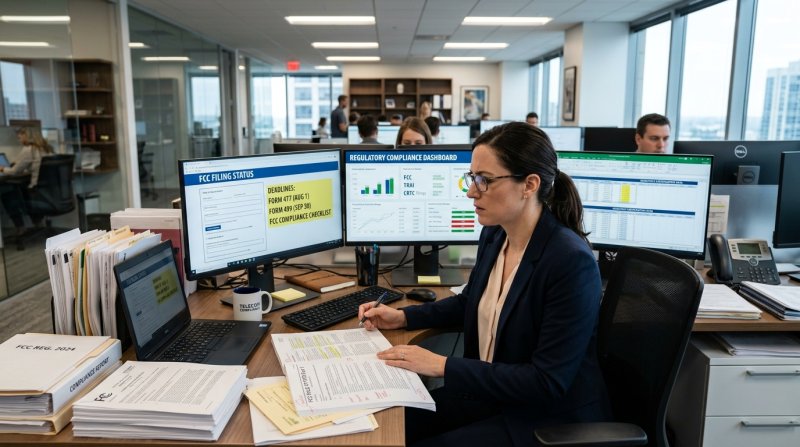
The 2026 FCC Form 481 Filing Season Is Open: How ETC Providers Can Survive the Crunch Without Losing Their Minds
The window is officially open. As of April 1, 2026, every Eligible Telecommunications Carrier participating in the Lifeline program must file and certify FCC Form 481 through USAC's One Portal. The deadline is July 1, 2026. This is not optional, and it is not a suggestion.
Whether you are actively seeking Lifeline support this year or not, you still have to file. USAC has been crystal clear on this point. All ETCs participating in Lifeline must submit the form, even if the provider is not requesting funds. The penalties for missing the window or filing incomplete data are not trivial. FCC enforcement actions, repayment obligations for improperly received funds, and in extreme cases, removal from the program altogether.
This is the part where most compliance officers start sweating. And honestly, they are right to.
What FCC Form 481 Actually Requires in 2026
The FCC Form 481 is the annual compliance certification that keeps your ETC status intact. It collects financial and operational information across several modules, and the specific requirements depend on whether you are a High Cost carrier, a Lifeline-only carrier, or both.
For Lifeline providers specifically, the form requires you to certify your subscriber counts, detail your service territories, confirm eligibility verification procedures, and attest that you are complying with all FCC rules. The carrier obligation verification section is where things get detailed. You need to show that every subscriber on your NLAD list was properly verified at enrollment and that you have the documentation to back it up.
If you are doing this manually, you are already behind.
The Manual Process Is Where Carriers Get Burned
Let me be direct about this because I have seen it happen too many times. The carriers that run into trouble with Form 481 are not necessarily the ones doing anything fraudulent. They are the ones who tried to compile everything in the last two weeks of June using spreadsheets, shared drives, and whoever was available to pull NLAD reports.
Manually compiling NLAD data, cross-referencing subscriber documentation, and generating the certifications your compliance officer needs to sign off on is a process that typically takes weeks. For larger carriers with thousands of subscribers, it can take months. And the margin for error is essentially zero. One incorrect subscriber count, one expired documentation record, one data mismatch between your system and NLAD, and you are staring at an FCC audit.
The FCC has been signaling for months that program integrity is a top enforcement priority. The February 2026 NPRM on Lifeline and Link Up Reform specifically called out enhanced eligibility verification and stricter compliance obligations. And on April 10, 2026, the FCC adopted a final rule modernizing its suspension and debarment procedures to make it easier to remove bad actors from federal support programs. These are not abstract regulatory gestures. They are enforcement signals.
The message is simple. The FCC wants to see accurate data, verified eligibility, and complete documentation. If your Form 481 does not reflect that, you are making yourself a target.
The Documentation Problem Is Getting Worse
Here is what a lot of smaller ETCs underestimate. The FCC requires you to retain subscriber eligibility documentation going back. Reseller certification obligations now extend to three years of recordkeeping under recent FCC guidance. That means when you file your 2026 Form 481, you need to have documentation on file for subscribers enrolled in 2023, 2024, 2025, and 2026.
If your enrollment process has been inconsistent, or if you have had any staff turnover in the past three years, you may not have complete records for every subscriber in your NLAD listing. And here is the uncomfortable part. NLAD itself is not always perfectly synchronized with your internal records. Subscribers sometimes get added to NLAD without complete documentation. De-enrollments sometimes lag. The result is a mismatch between what you think your subscriber count is and what NLAD shows.
When you certify your Form 481, you are certifying that these numbers match and that every single subscriber has documentation on file. If they do not, you are filing a false certification.
I have heard from compliance officers at multiple ETCs in recent months who discovered discrepancies only when they started preparing for the annual filing. The typical scenario goes like this. They pull the NLAD report, compare it to their internal CRM, and find a handful of subscribers who appear in NLAD but not in their system, or vice versa. Resolving each one requires digging into archived emails, enrollment forms, and notes from customer service representatives who may no longer work there.
This is the part of the process that takes time, and it is exactly the part that gets left until the last minute.
Why the 2026 Filing Season Demands Extra Attention
A few things are different this year. First, the FCC Form 481 filing window opened on April 1, which means you have three months to prepare. That sounds like a lot until you realize how much data you need to compile, verify, and reconcile. Three months goes fast when you are working with legacy systems and manual processes.
Second, the FCC has signaled through multiple proceedings that 2026 is the year of heightened program integrity enforcement. The Lifeline and Link Up Reform NPRM, the enhanced eligibility verification proposals, and the debarment modernization rule all point in the same direction. The FCC is raising the bar for what it expects from ETCs, and it is building stronger mechanisms to enforce those expectations.
Third, the subscriber data integrity problem has been getting worse across the industry. USAC's own reports have acknowledged that duplicate enrollments, outdated de-enrollments, and documentation gaps are recurring issues in the Lifeline program. When the FCC looks at your Form 481 filing, it is essentially asking you to vouch for your data quality. If your data quality is poor, your filing will reflect that.
A Practical Checklist for Surviving the 2026 Filing Season
Here is what I would do if I were running compliance at an ETC right now. Start immediately. Not next week, not after you finish that other project. Right now. Pull your NLAD subscriber list and compare it to your internal records. Identify every discrepancy and assign someone to resolve each one. This is not a two-day task.
Document your enrollment verification process and confirm it meets current FCC standards. The FCC has been clear that eligibility verification must be rigorous, and outdated or informal enrollment procedures are a compliance liability.
Organize your subscriber documentation going back three years. Every enrollment form, every eligibility verification record, every communication with USAC about subscriber status changes. If you cannot put your hands on these documents immediately, you have a problem that needs solving before the July 1 deadline.
File early. USAC's One Portal opens on April 1 and closes on July 1. There is no grace period and no extension. Filing early gives you buffer time to address any unexpected issues that arise.
Consider whether your current process is built to scale. If you are handling more than a few hundred Lifeline subscribers and you are still compiling Form 481 data manually, you are accepting unnecessary risk. The time it takes to automate eligibility verification and NLAD audit workflows is a fraction of the time you will spend doing it by hand, and the accuracy improvement is substantial.
How Automation Changes the Math
ProofIQ built its compliance automation tools specifically for situations like this. Verda handles FCC and USAC eligibility audits and NLAD validations, which means it can cross-check your NLAD subscriber data against your internal records in minutes rather than days. When discrepancies show up, Verda flags them with specific resolution steps so your team is not guessing about what to fix.
Sentra handles the ongoing compliance monitoring side. It tracks subscriber eligibility on a continuous basis, not just during annual filing season. This means when Form 481 comes around, you are not scrambling to reconstruct your data. The data has been maintained all year.
The typical result for carriers using these tools is an 85 to 90 percent reduction in audit preparation time. Compliance officers who used to spend weeks pulling NLAD reports and cross-referencing documentation can complete the same process in a matter of seconds. The accuracy is higher because the system catches errors that human reviewers miss.
These are not marketing claims. The reduction in time reflects the actual difference between automated cross-checking and manual spreadsheet-based reconciliation.
The Bottom Line for 2026
The FCC Form 481 filing window is open. You have until July 1 to file, and the FCC is watching this year with more scrutiny than ever. The Lifeline program is under active reform, enforcement mechanisms are getting sharper, and the data integrity standards are rising.
If you approach this filing season the same way you did three years ago, you are accepting risk that you do not need to accept. The carriers that will emerge from this compliance cycle without issues are the ones that started early, verified their data systematically, and treated Form 481 as a year-round responsibility rather than an annual crisis.
The window is open. What you do with the next three months will determine how your 2026 filing season ends.
ProofIQ helps ETC providers manage FCC and USAC compliance more efficiently. Our Sentra, Verda, and Cora platforms automate eligibility verification, NLAD auditing, and subscriber documentation checks so your compliance team is not working against the clock when the filing deadline arrives.