Your FCC Re-Certification Deadline Passed. Now the Audit Letter Is Coming.
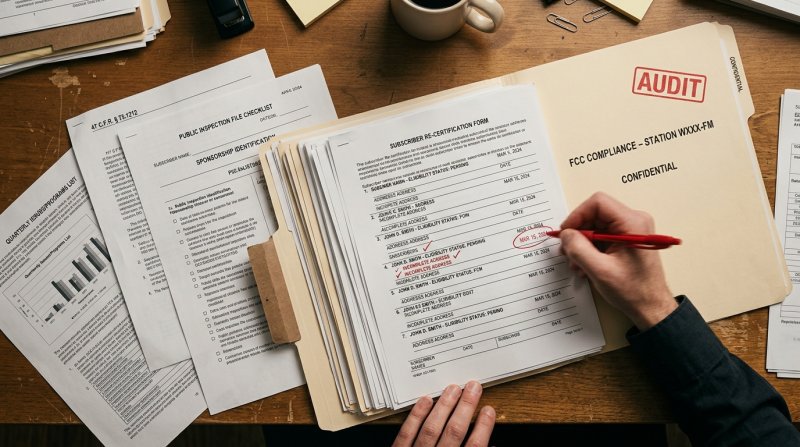
Your FCC Re-Certification Deadline Passed. Now the Audit Letter Is Coming.
Let me tell you about a conversation I had last fall with a carrier ops manager in Ohio. He was calm about it. Too calm, honestly. He said, "We missed the re-cert window for about 400 subscribers last cycle. It's fine, we'll get to it next quarter."
It is not fine. And the audit letter does not care that you plan to get to it next quarter.
If you're running a Lifeline carrier, you need to understand something about FCC re-certification rules. The requirement under 47 CFR 54.405(e) is not optional. USAC runs the audits. And in my experience working with carriers over the past few years, the audit letter tends to show up about 60 to 90 days after your submission window closes. That is based on patterns I've seen, not a published USAC SLA, so take it for what it's worth. But the pattern is consistent enough that I tell every new operator we onboard: treat your re-certification window like a tax deadline. Because the consequences are similar.
Most operators know re-certification exists. What they underestimate is how specific the audit triggers are, what documentation USAC actually wants to see, and how fast a missed cycle turns into a formal finding with real dollar exposure.
The Rule Nobody Reads Carefully Enough
Here is where the re-certification requirement lives: FCC 47 CFR 54.405(e). Every year, carriers must confirm that Lifeline subscribers still meet eligibility criteria. USAC runs a national verifier that cross-checks against federal databases. If your re-certification batch comes back with mismatches or incomplete submissions, you get flagged. There is no grace period built into the rule, which always surprises people.
The actual timeline is roughly this. USAC sends re-certification forms for subscribers who hit their 12-month mark. You have a window, usually 30 days, to process and return. Miss it, and USAC issues a notice. Miss that, and you start accruing findings. The audit letter shows up 60 to 90 days after the missed deadline. Like I said, not a published SLA, just what I've seen play out across a dozen carriers over the past few years. If someone has better data on this, I'd genuinely like to see it.
What the audit letter asks for: proof of income or benefit program participation at initial enrollment. Confirmation the subscriber was still eligible during the re-certification period. Documentation that your team actually ran the checks. Subscriber-level records, not aggregate counts. USAC wants to see which subscribers were active, that you confirmed eligibility, and that you had a paper trail for every single one.
This is where carriers break down. Not because they were fraudulent. Because their record-keeping was sloppy. Maybe they did the re-certification calls but did not document them properly. Maybe they sent emails but never kept the delivery receipts. Maybe they had the data in a system but never printed it out in a format USAC would accept.
I worked with a carrier in the Midwest last year that had done everything right on the phone calls. They had actually called each subscriber, confirmed eligibility, and kept notes. But when USAC asked for the documentation, the carrier could not produce anything timestamped that showed when the calls happened and what the outcome was. Their notes were in a CRM that did not generate exportable audit logs. That is a documentation problem. The FCC does not care about your intent. They care about what you can show them.
What 2,300 Flagged Subscribers Actually Costs
Let me give you a specific number, because abstract regulatory language does not land the way a dollar figure does.
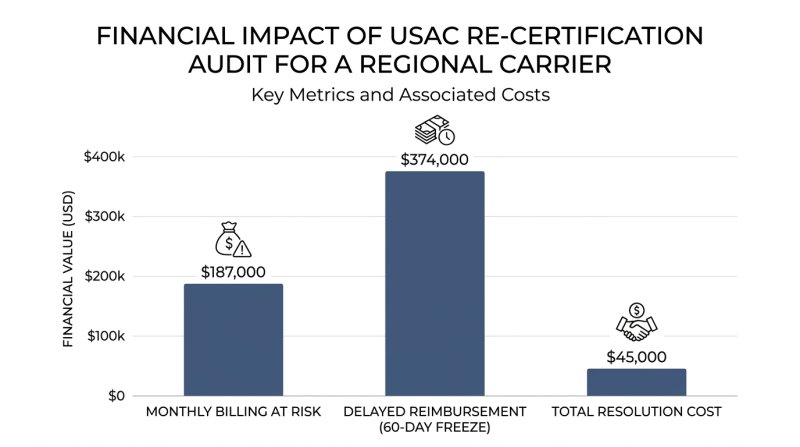
A regional carrier we worked with in early 2025 had 2,300 subscribers flagged during a USAC re-certification audit. They had processed re-certifications but their documentation was incomplete. USAC initially flagged the full 2,300 for potential de-enrollment. This carrier was billing roughly $187,000 per month across that subscriber base. USAC froze their claims for 60 days while the audit was resolved. That is about $374,000 in delayed reimbursement. They eventually got most of it back, but only after three rounds of supplemental documentation and hiring a compliance consultant. Total cost to resolve was around $45,000 in external fees and internal staff time. And that was a case that ended reasonably well.
If USAC had determined the carrier knowingly continued billing for ineligible subscribers, the penalties would have been different. FCC enforcement actions under the Low Income program include repayment of funds received plus fines. For a small regional carrier, those numbers can be existentially serious.
What I'm getting at: missing re-certification is not a paperwork problem. It's a cash flow problem and a finding problem. And it compounds faster than most operators expect. The billing freeze alone, even if it gets resolved, disrupts your working capital in ways that are hard to recover from if you're running thin.
The Documentation Gap Nobody Talks About
I want to describe something I see repeatedly with operators who come to us after a close call or an audit notice.
Their re-certification process relies on institutional knowledge. One or two people on the ops team know the window is coming, they pull a report, they make some calls, they note the results somewhere. It works until those people go on vacation. Or until the window sneaks up during a busy season. Or until the volume grows to a point where the manual process cannot keep up.
The documentation standards have gotten stricter over the past two years. USAC runs more granular audits now, looking at subscriber-level records rather than aggregate compliance rates. That means your spreadsheet with the summary counts is not going to cut it anymore. USAC wants to see the underlying documentation for each subscriber. The enrollment form signed at initial eligibility. The re-certification confirmation, timestamped, with a delivery method. The outcome of the verification. The final enrollment or de-enrollment decision.
For 1,000 subscribers, that is 1,000 individual records. For 10,000 subscribers, it is 10,000. If you're doing this in Google Sheets and relying on one person to keep it organized, you're one sick day away from a documentation gap that could trigger exactly the kind of audit letter nobody wants to receive.
Here's the thing that surprises operators most when we walk them through the audit request list: USAC is not asking for perfect documentation. They're asking for complete documentation. There is a difference. If you have a missing record for one subscriber out of 500, that is a finding. If you have missing records for 200 out of 500, that is a pattern. Patterns trigger repayment demands.
What a Re-Certification Workflow Actually Looks Like
I'm going to be specific about what this process involves, because I think operators tend to underestimate the operational lift once you get past the theoretical compliance requirement.
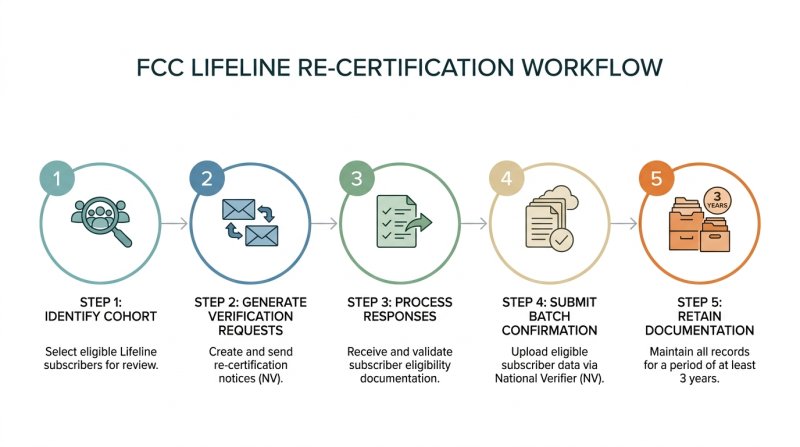
Step one, identify your subscriber cohort for the current re-certification window. USAC provides this data but you need to cross-reference it against your own records, because discrepancies between your count and USAC's count are a trigger for audit. Step two, generate verification requests for each subscriber. The FCC does not specify the method. Email, phone, mail, all acceptable, but you need to log the method and the timestamp. Step three, process responses within the 30-day window. If a subscriber does not respond, you need to document your follow-up attempts before you can de-enroll them. Step four, submit the batch confirmation to USAC with subscriber-level outcome data. Step five, retain all documentation for a minimum of three years, because audits can come back that far.
Five steps. Each one generates documentation. Each documentation point is something USAC can ask for. If you're running this manually, you need to be honest with yourself about whether your team has the bandwidth to do all five steps correctly for every subscriber in every window. Most teams don't. They do the first three steps and then run out of time for the documentation work.
How We Built This Into ProofIQ Sentra
We built the Sentra re-certification module specifically to handle the documentation burden, not just the communication burden.
The system tracks each subscriber's re-certification window based on their initial enrollment date. It generates outbound verification requests automatically and logs every interaction with a timestamp and a delivery confirmation. When a subscriber does not respond within the window, the system flags them for review and generates the de-enrollment paperwork with the correct FCC-compliant language. Everything is stored in an exportable format that can be pulled directly if USAC requests a production.
What I care about as someone who has sat in audit prep sessions: the workflow is auditable from end to end. When USAC asks for documentation, you don't have to reconstruct it. You pull the report and hand it over. That's the difference between a finding and a finding that turns into a repayment demand.
I want to be honest with you though. Automated workflows don't fix underlying eligibility problems. If your subscriber base has a high percentage of people who no longer qualify, no software is going to make that problem disappear. What software can do is make sure you're not accidentally billing for people you thought were still active when they were not, which is how most non-fraudulent audit findings originate.
What to Do Right Now If You Think You Missed Something
First, check your last re-certification submission date against the window for your subscriber cohort. If you submitted on time, document that and move on. If you didn't, figure out exactly which subscribers were affected and when the deadline passed. You need to know the scope before you can do anything else.
Second, pull whatever documentation you have, even if it's incomplete. USAC auditors respond better to carriers who come in with documentation, even imperfect documentation, than carriers who show up with nothing and ask for time to find it. I've sat in those rooms. The auditors prefer the former. It is not a guarantee of a good outcome, but it is a meaningful difference in how the conversation goes.
Third, contact USAC directly if you identify issues. There is a remediation process. It is not fast. But it is better than ignoring the problem and waiting for the formal audit letter to arrive. Going to USAC proactively and demonstrating you identified the issue and are trying to correct it tends to affect how the finding is written. I'm only half joking when I say the difference between a written finding and a verbal finding is often about three degrees of cooperation.
Fourth, if you have the budget, get someone involved before the audit, not after. I know that sounds like a pitch, and maybe it is, but I've seen enough audit letters to know that the carriers who come in prepared have better outcomes. Not always. But often enough that it is worth saying.
FAQ
How often does FCC require Lifeline subscriber re-certification? Once per year. Every Lifeline subscriber must have eligibility re-confirmed annually under FCC rules. The clock starts from the subscriber's initial enrollment date, so the window varies by subscriber, which is part of what makes this operationally complex for carriers with large subscriber bases.
What triggers a USAC audit of my re-certification process? Common triggers include missed re-certification windows, high rates of non-response from subscribers, discrepancies between your subscriber counts and USAC records, and random sampling as part of USAC's regular oversight. Carriers with subscriber bases over 5,000 tend to get audited more frequently simply due to the statistical likelihood of triggering review thresholds.
How long does it take to resolve a USAC audit once it starts? For documentation gaps on a straightforward case, 60 to 90 days. For cases involving subscriber eligibility disputes or incomplete records across a large subscriber base, six months or longer is not unusual. The carriers we've worked with who resolved fastest were the ones who had audit-ready documentation at the time the letter arrived.
What happens if I cannot produce the documentation USAC asks for? If you can't document that you ran the re-certification process and made eligibility decisions based on verified information, USAC can require you to repay benefits received for subscribers who could not be confirmed as eligible. In cases where intent to defraud is suspected, FCC enforcement gets involved, which means potential fines on top of repayment.
Can I use automated calls or emails for re-certification confirmation? Yes, automated outreach is acceptable, but you need to document the method, the timestamp, and the outcome. USAC expects to see that you made a genuine attempt to reach the subscriber and gave them a real opportunity to confirm eligibility. A single email sent to an invalid address does not constitute a good-faith verification attempt.
How do I know if my documentation is audit-ready? Ask yourself this: if USAC requested documentation for a randomly selected sample of 50 subscribers from your current roll, could you produce the enrollment form, the re-certification confirmation, and the outcome for each one within 48 hours? If the answer is not clearly yes, you have a documentation gap worth addressing before your next re-certification window.
If you want a practical look at where your current documentation stands before the next window opens, request a compliance audit review from ProofIQ. We look at your existing workflows and identify the gaps before they become audit findings.
Last updated: April 26, 2026 Author: David Chen, Senior Compliance Engineer at ProofIQ